
The Odyssey: the 7 Deadly Sins Personified
2026 has been a good wakeup call for humanity. With rising costs of living, war raging on, and the overall lack of humanness — we have learned to live in a highly combative civilization. It’s why films with such outwardly powerful messages revolving around humanity, gratitude, and peace are so important. Christopher Nolan’s The Odyssey (2026) delivers a highly-anticipated, anti-war film adaptation of Greek poet Homer’s outstanding epic, The Odyssey (7th/8th century BCE). With an absolutely star-studded cast, Nolan shows off talent such as Matt Damon (Odysseus), Anne Hathaway (Penelope), Tom Holland (Telemachus), Zendaya (Pallas Athena), Bennie Safdie (Agamemnon), Lupita Nyong’o (Helen/Clytemnestra), Jon Bernthal (Menelaus), and even more.
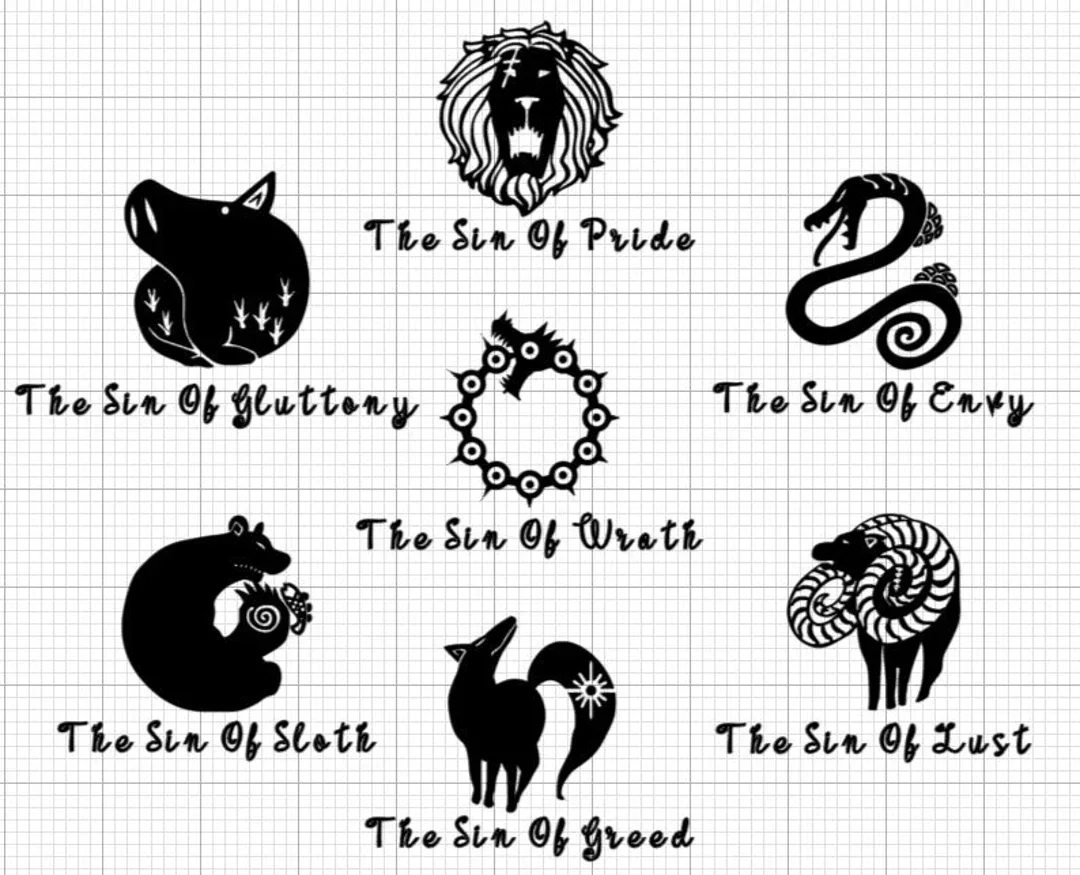
The Seven Deadly Sins
My first watch of the film confused me a bit, as I left the theater not knowing fully how I felt around it. I have read Homer’s The Odyssey several times as if it were my choice of religious text, so every little detail was important to me. After then coming to terms with the fact that the movie would be 8 hours long, had every minute detail been delivered correctly, I decided to watch it again. My second watch around, I picked up on more of the character’s traits, but in particular what lessons these traits teach us in life. Naturally, the seven deadly sins came to mind. Pride, avarice, lust, envy, gluttony, wrath, and sloth all have found a cozy home in Nolan’s characters.
〰️
〰️
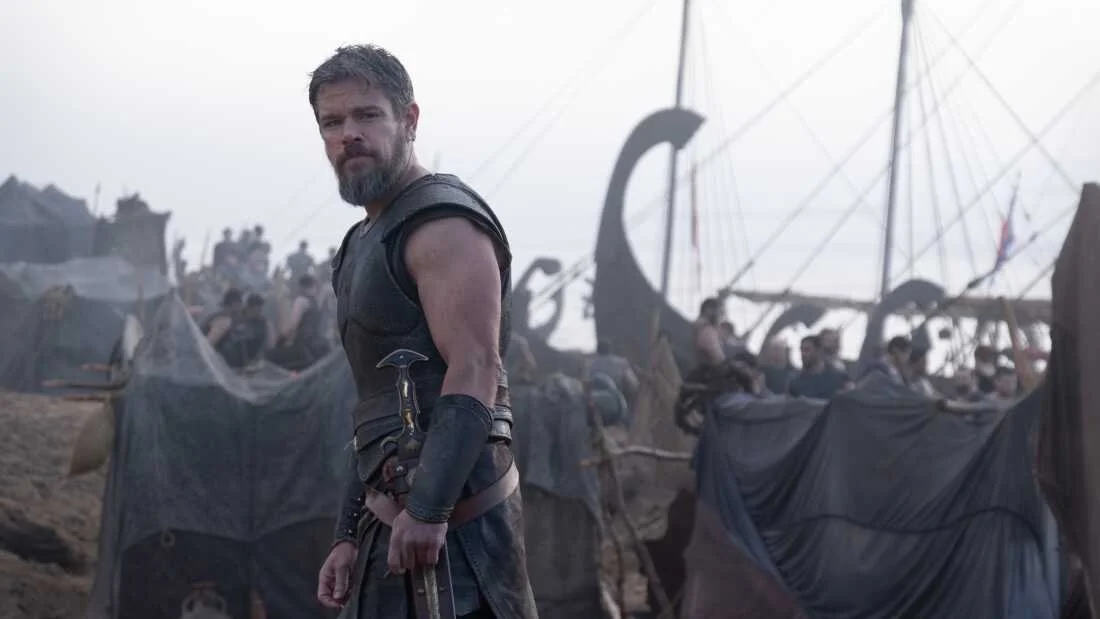
Matt Damon as Odysseus.
For all accounts guilty of prideful and slothish behavior, I hereby name the charged — Odysseus. Odysseus displayed his pride during the encounter with the cyclops Polyphemus, son of Poseidon. After escaping Polyphemus’ cave, Odysseus flings a powerful arrow cutting right through the cyclops’ eye and blinding him. Even though Odysseus and his men had made a successful escape, Odysseus, the masterful bow-wielder, just had to rub salt in the wound. This stupid action only angered Poseidon, god of the Sea, and made the journey more arduous. Alongside the journey, the Trojan War campaign claimed many of Odysseus’ men. Apart from Sinon, we learn that Odysseus put off honoring all his men that fought for Agamemnon, thus showing us the sin of sloth. Instead of following the westerly winds to properly pay homage to the fallen, Odysseus and his remaining men follow the southerly winds in search of provisions. It is at the end of the film that Odysseus learns that his homecoming was at the expense of every man who has ever fought for him. It is only then that himself and his Queen Penelope sail west, chasing the escaping sun to honor his men and live his life in serene exile.
For all accounts guilty of avarice or greed, I hereby name the charged — the suitors. Night after night, Penelope’s suitors would sit in the grand hall for a feast of kings. And night after night, they would be entertained. With Odysseus gone and only weak Telemachus left to supervise, the suitors took Zeus’ Law and abused it for their own benefit. Zeus’ Law, or xenia, states: treat others as you would like to be treated, as you never know who is a God in disguise. Loopholing this law to their own agenda only further proves that the suitors were nothing but full of greed and were only sticking around in hopes to claim Odysseus’ throne and riches.

Robert Pattinson as Antinous.
One suitor in particular, Antinuos, is guilty of envy. Envy is a jealousy that makes you go green in the face. It makes you seethe with anger that what the other person has, you don’t. All along, Antinuos was vying for his spot next to Penelope as king of Ithaca. His envy was so strong that he conjured a murderous plot against Penelope’s son, Telemachus, to prevent him from being the one that sat upon Ithaca’s throne. Though unsuccessful in his venture and ultimately defeated by Odysseus, we learn why envy can lead our human nature into risky territory.
Opposing envy, we have the sin of lust. The Sirens are a big part of Homer’s The Odyssey, but we see a small depiction in Nolan’s adaptation. In Greek mythology, the Sirens are beautiful half-woman, half-bird beings that lure travelers onto their rocky shores and moor their ships completely. Even more so, the Sirens sing a melodious tune known as the “Siren song” that lures these innocent voyagers. Unfortunately, one of Odysseus’ men, Anchilaus, falls victim to the Siren song and immediately abandons ship to swim towards the enchanting creatures. Not knowing the consequences of his fatal attraction, he selfishly leaves his men behind and follows his urges. A prime example of lust.
Speaking about acting gruesomely on desires, another sin of consequences is gluttony. The overindulgence, in mostly food and drink, will and can cost you. As Odysseus and his men turn into the Sun isle, they are met with a condition from Odysseus: do not eat the cattle of the sun God, Helios or you will die. While the men held out on this promise for a while, they became irrevocably hungry and end up ravaging the cattle for its meat. Despite knowing they were to die if they feast on the cattle, all men but Odysseus continued onward with eating. To punish this behavior, the crew are met with a vicious sea storm that does in fact kill everyone but Odysseus.

Lupita Nyong’o as Clytemnestra.
For the final sin, wrath, there are a few contenders. Given that The Odyssey follows the journey of the Trojan War, it would be silly not to have multiple names seeking wrath and vengeance. The two from the film that stood out the most to me were the Gods and Clytemnestra, wife of King Agamemnon. I’ll start with the Gods. Each and every action Odysseus performed was met with some sort of punishment from the Gods. Harm Polyphemus, son of Poseidon? Don’t worry Poseidon is sending a horrific sea storm. Witness your men feasting upon Helios’ cattle? No problem, your boat will be ripped in two, killing your men, but sparing only you. Spearhead the campaign to pillage innocents in the kingdom of Troy? Congratulations, you have just violated Zeus’ Law! The Gods have it out for Odysseus, rightfully so. This only makes his journey harder and more strenuous. Clytemnestra has suffered a similar fate at the hand of her husband, Agamemnon. To bring well-wishes and success to Agamemnon’s cause of war, he sacrifices their daughter to the sea. This builds contempt and a fiery wrath in Clytemnestra’s heart as time passes. When Agamemnon returns home, Clytemnestra and her lover successfully form a plot to murder her husband. Once the deed is done, Clytemnestra is then murdered by her own son, Orestes, who was looking to avenge his father. This is wrath come full circle.
〰️
〰️
Nolan’s The Odyssey is no stranger to the film industry. Several adaptations of the story have been made and remade, but what makes this version stand out the most is that Odysseus is delivered to the audience in a more realistic, human light. He is not a perfect person, nobody in Homer’s epic, besides the Gods, could claim that title. But that is the beauty of it. Odysseus is brought to us as a man riddled with the guilt of putting his men through things that could’ve easily been bypassed had he just come home. And through it all, we see the unraveling of each of the seven deadly sins. Picking apart these characters and constructing a more human version, rather than a mystical one, is the best thing Christopher Nolan has done with this film.
